











Teqball Showcases Strong Continuing Growth at the 33rd SEA Games in Bangkok
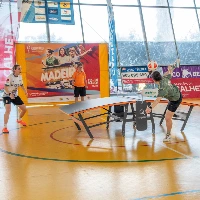
Following the successful conclusion of the 8th Teqball World Championships, the Teqball calendar continued at full speed with the 33rd SEA Games, held in Bangkok, Thailand, where Teqball featured as an official medal sport.
A total of 48 athletes from seven nations competed across five categories, representing Indonesia, Laos Vietnam, Malaysia, Myanmar, Thailand and The Philippines. The competition highlighted the rapid development and increasing competitive depth of Teqball within the Southeast Asian region.
Men’s Singles
In the men’s singles category, Uthen Kukheaw (THA) carried his outstanding form from the World Teqball Championships into the SEA Games. After securing a bronze medal at the World Championships, the Thai player advanced from his group without dropping a set, defeating opponents from Malaysia and The Philippines.
From the opposite group, Yoga Ardika Putra (INA) also progressed undefeated, finishing with an impressive 72–41 point difference.
The semifinals delivered one of the tournament’s most exciting encounters, as Kukheaw faced Myanmar’s Friday Saw. Despite strong defensive play and creative short shots from the Myanmar athlete, Kukheaw prevailed in a hard-fought 2–1 victory. Ardika Putra reached the final with a 2–0 win over his Malaysian opponent.
In the final, Ardika Putra challenged Kukheaw in a closely contested first set, which ended 12–10 in favour of the Thai player. Kukheaw then took control of the second set to secure the gold medal.
Women’s Singles
The women’s singles competition followed a similar pattern, with Jutatip Kuntatong (THA) dominating her group, while Zikhra Dwi Putri (INA) advanced from the other group.
The knockout stage again produced a Thailand versus Indonesia final. Kuntatong delivered a commanding performance, winning the final 12–1, 12–6 to claim the gold medal.
Men’s Doubles
In men’s doubles, the Thai duo Sorrasak Thaosiri - Jirati Chanliang topped their group undefeated, while Indonesia’s Husni Uba - Mardan Laode Ardin also advanced in first place from the other group.
Both pairs continued their dominant run in the knockout stage, setting up a final between Thailand and Indonesia. The opening set was extremely close, with the Thai Team edging it 12–11, before securing the gold medal with a decisive 12–2 victory in the second set.
Women’s Doubles
The Thai duo Suphawadi Wongkhamchan - Jutatip Kuntatong, reigning world champions and three-time world title holders, arrived in Bangkok in excellent form and progressed undefeated through the group stage. Myanmar’s Naing Naing Win - Hsu Mon Aung also advanced unbeaten from their group, finishing with a dominant 72–17 point difference.
Both teams won their semifinals convincingly, meeting in the final where the Thai duo once again proved unstoppable, claiming gold with a 12–3, 12–6 victory.
Mixed Doubles
In mixed doubles, Thailand and Indonesia topped their respective groups, while the Myanmar pair Naing Naing Win - Ko Ko Lwin showcasing prominent performance by advancing to the knockout stage in second place.
The Thai duo Phakpong Dejaroen - Suphawadi Wongkhamchan progressed comfortably to the final, while Myanmar defeated Indonesia 2–1 in a thrilling semifinal. In the final, Thailand maintained control throughout the match and secured the gold medal with a 12–1, 12–6 win.
Medal Summary and Event Impact
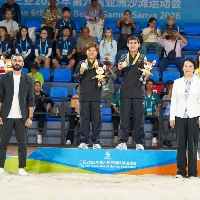
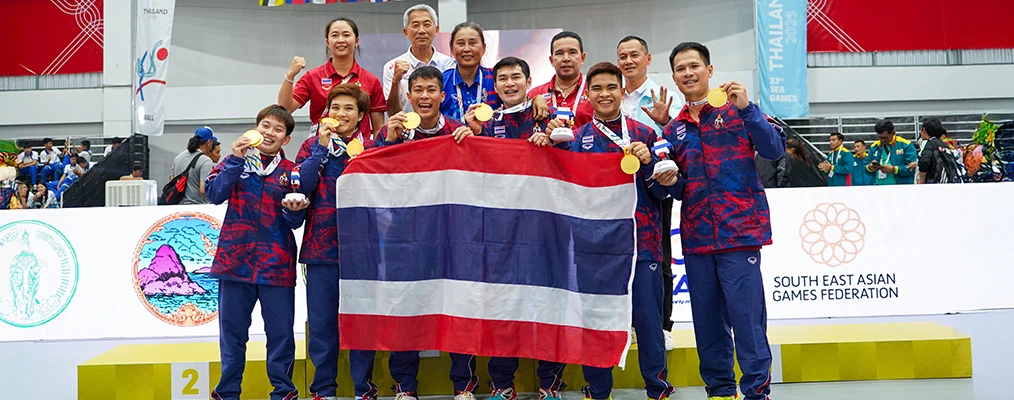
Thailand concluded the competition with a perfect performance, winning all five gold medals. Malaysia secured bronze medals in all five categories, while Indonesia finished with three silver and two bronze medals. Myanmar claimed two silver and two bronze medals, Vietnam earned one bronze medal, and Laos finished without a medal.
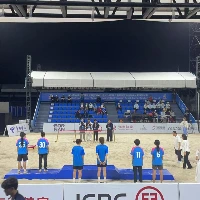
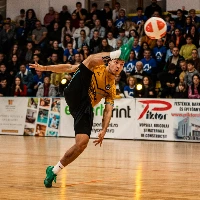
The 33rd SEA Games provided an outstanding platform for Teqball, with players competing in front of an enthusiastic and supportive crowd that created a vibrant atmosphere throughout the tournament. The event clearly demonstrated the continued growth and rising competitive standard of Teqball in the Southeast Asian region, highlighting the emergence of new talents and the sport’s strong future potential.