









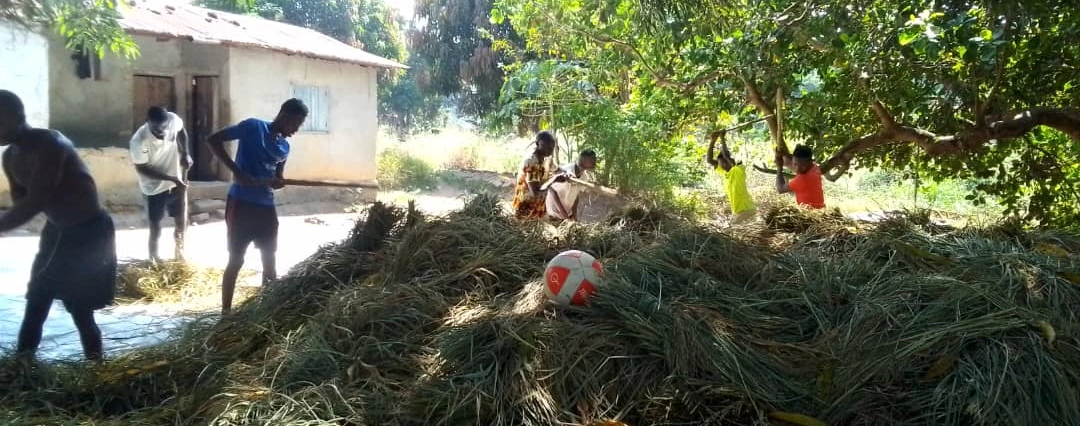
Sierra Leone Teqball Federation’s Agricultural Initiative: Building Resilience Through Community and Self-Reliance
Since 2019, the Sierra Leone Teqball Federation (SLTF) has been implementing a unique and forward-thinking agricultural initiative centered on rice production. Designed as a self-sustaining project, the initiative aims to strengthen food security while supporting the federation’s long-term development objectives beyond sport.
Notably, the project has been carried out without government funding or support from international agencies. Its continuity has been made possible through internal commitment, collective effort, and the personal dedication of the federation’s national team leader, whose ongoing support has played a key role in sustaining the initiative over the years.
A Consistent and Disciplined Agricultural Cycle
Since its launch, the rice farming project has followed a structured annual agricultural cycle. Land clearing traditionally begins on 3 August, marking the official start of the farming season. Rice planting typically takes place between 7 and 12 August, depending on weather conditions and available manpower. Harvesting is scheduled for January of the following year, allowing the crops to mature naturally.
Despite operating with limited resources, the Sierra Leone Teqball Federation has maintained this disciplined cycle every year, demonstrating strong organizational commitment and long-term vision.
Gradual Growth and Measurable Progress
Over time, the project has shown steady improvement. In 2025, the federation recorded a harvest of 15 bags of rice. While modest, this result reflected resilience in the face of challenges related to funding, equipment, and labor. Importantly, each harvest has been carefully managed, with portions allocated for reinvestment and future initiatives to ensure sustainability.
A Breakthrough Season in 2026
The 2026 farming season marked a significant milestone in the project’s history. Land preparation began slightly earlier, on 4 August 2025, followed by rice planting between 8 and 13 August. These adjustments allowed for improved preparation and greater planting efficiency.
Harvesting officially commenced on 2 January 2026 and is currently ongoing. The first phase alone yielded 27 bags of rice—nearly doubling the previous year’s output. This achievement represents a major success for the federation and reflects improved farming practices, effective teamwork, and unwavering dedication.
The rice was formally flagged on 10 January 2026, symbolizing not only agricultural success, but also progress, hope, and self-reliance.
Impact Beyond the Field
Community impact remains a central pillar of the initiative. Following each harvest, rice is distributed to medical personnel, members of the National Olympic Committee community of Sierra Leone, local community stakeholders, as well as teqball supporters and fans. This approach reinforces solidarity, strengthens cross-sector relationships, and highlights the role sports organizations can play in broader social and national development.
Looking Ahead
While the progress achieved to date is significant, the Sierra Leone Teqball Federation continues to seek support from local and international partners to further expand and enhance the project. With additional resources, the initiative has the potential to increase food security, empower local communities, and serve as a model for sports-driven development in Sierra Leone.
Through innovation, resilience, and community engagement, the SLTF’s agricultural journey demonstrates how sport can extend its impact far beyond competition—contributing meaningfully to sustainable development and social responsibility.